
Stellate Ganglion Blocks
The stellate ganglion (SG) is defined as the first thoracic ganglion (a bundle of nerves in the upper chest) or the conjoined first thoracic ganglion with the lowest cervical ganglion. In certain conditions, pain is transmitted through the sympathetic pathway. In the head and neck and upper extremity, this sympathetic pathway travels via the SG. Thus, the SG block aims to interrupt sympathetically mediated pain that travels through this relay, commonly associated with neuropathy.
ARE STELLATE GANGLION BLOCKS RIGHT FOR ME?
Your eligibility for a Stellate Ganglion Block will be determined based on your medical history, the type and location of your pain, and any underlying health conditions. Ideal candidates are those who suffer from conditions such as Complex Regional Pain Syndrome (CRPS), certain types of nerve pain, or vascular issues affecting the upper extremities. However, patients with infections, bleeding disorders, or allergies to anesthetics may not be suitable for this procedure. A thorough evaluation by your pain physician will determine if a Stellate Ganglion Block is appropriate for you.
How do stellate ganglion blocks work to control my pain?
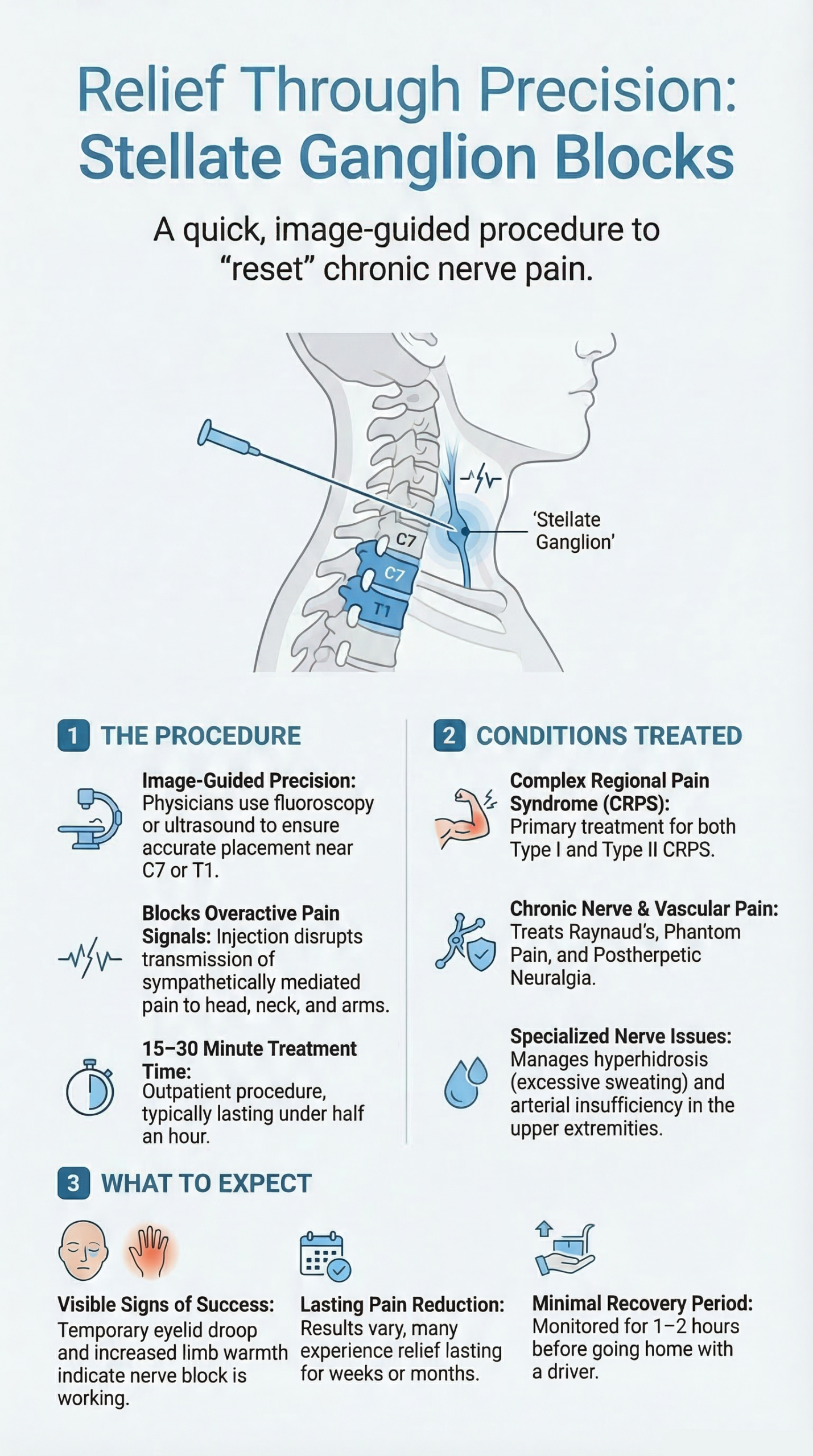
After careful placement of the needle using fluoroscopic guidance, at the base of the neck (at the level of the C7 or T1 vertebral body) and location confirmed using contrast dye, therapeutic medication is injected incrementally. The injectate disrupts the transmission signaling of the sympathetic nerves and thus sympathetically mediated pain.
PREPARING FOR TREATMENT
You should avoid eating or drinking for several hours before the procedure, depending on your doctor’s recommendations. Inform your physician of any medications you are currently taking, as some, like blood thinners, may need to be adjusted before the procedure. Wear loose-fitting clothing to the appointment, and arrange for someone to drive you home, as the procedure may cause temporary side effects like dizziness or blurred vision.
What should I expect during the procedure?
The sympathetic nerve block, depending on the condition it is treating, may be utilized as a single, isolated injection or may be repeated frequently depending on therapeutic benefit and efficacy. It is important to speak with your pain physician about the frequency of sympathetic blocks that may be necessary. For conditions such as CRPS, there is no consensus on the number of blocks needed to result in maximum benefit and patients benefit from a single injection or a series of injections in sequence.
How is the stellate ganglion block performed?
The Stellate Ganglion Block is typically performed as an outpatient procedure. After the patient is positioned on their back, the physician uses imaging guidance, such as fluoroscopy or ultrasound, to accurately locate the stellate ganglion, which is near the C7 or T1 vertebra in the lower neck. A local anesthetic is used to numb the area, and a needle is carefully inserted into the targeted region. Once the needle is correctly placed, a contrast dye may be injected to confirm proper placement, followed by the injection of anesthetic or other medications to block the nerve signals.
How long does the stellate ganglion block procedure take?
The actual injection process takes about 15 to 30 minutes. However, you should plan for additional time for preparation, positioning, and post-procedure monitoring. The total time at the clinic may range from 1 to 2 hours. After the procedure, patients are monitored for a short period to ensure there are no immediate side effects before they are discharged.
AFTER TREATMENT
What can I expect after the procedure?
With the stellate ganglion blockade, it is important to understand the anticipated side effects of the procedure as well as potential complications. Transient eyelid droop, pupil changes, and lack of sweating as well as nasal stuffiness are all anticipated after the injection (a sign the sympathetic blockade is working); additionally one will notice decreased sweating of the affected limb and increase in skin temperature (on average 3 degrees C). It is very important you discuss with your pain physician the expected and associated effects of sympathetic nervous system blockade so that you know what to expect the day of the procedure.
Once the sympathetic blockade has been established, one should notice a progressive decrease in the sympathetically mediated pain. It is important to speak with your pain physician about the frequency of repeating sympathetic blocks.
What symptoms should I reach out to my Doctor about?
While side effects like eyelid drooping, nasal stuffiness, or changes in pupil size, are common after the treatment, you should be aware of other potential symptoms that may necessitate contacting your doctor. These include:
- Persistent pain or swelling at the injection site
- Severe headaches
- Difficulty breathing or swallowing
- Infection signs
If you experience any of these symptoms, please reach out to your doctor immediately.
How soon will I experience pain relief after the injection?
Pain relief can vary from patient to patient. Some individuals may experience immediate relief, while others might notice improvement over the course of several hours or days. In cases where the block is effective, the reduction in pain might last for days, weeks, or even months. If relief is short-lived, your doctor may suggest repeating the procedure to achieve longer-lasting results.
Common Conditions Treated by Stellate Ganglion Blocks
Complex Regional Pain Syndrome (Type I and II)
Phantom Pain
Arterial Insufficiency of Lower Extremity
Raynaud’s Syndrome
Herpes Zoster
Postherpetic Neuralgia
Hyperhidrosis
Frostbite
Hyperhidrosis of upper extremity
Neuropathic Pain


