
Basivertebral Nerve Ablation (Intracept Procedure)
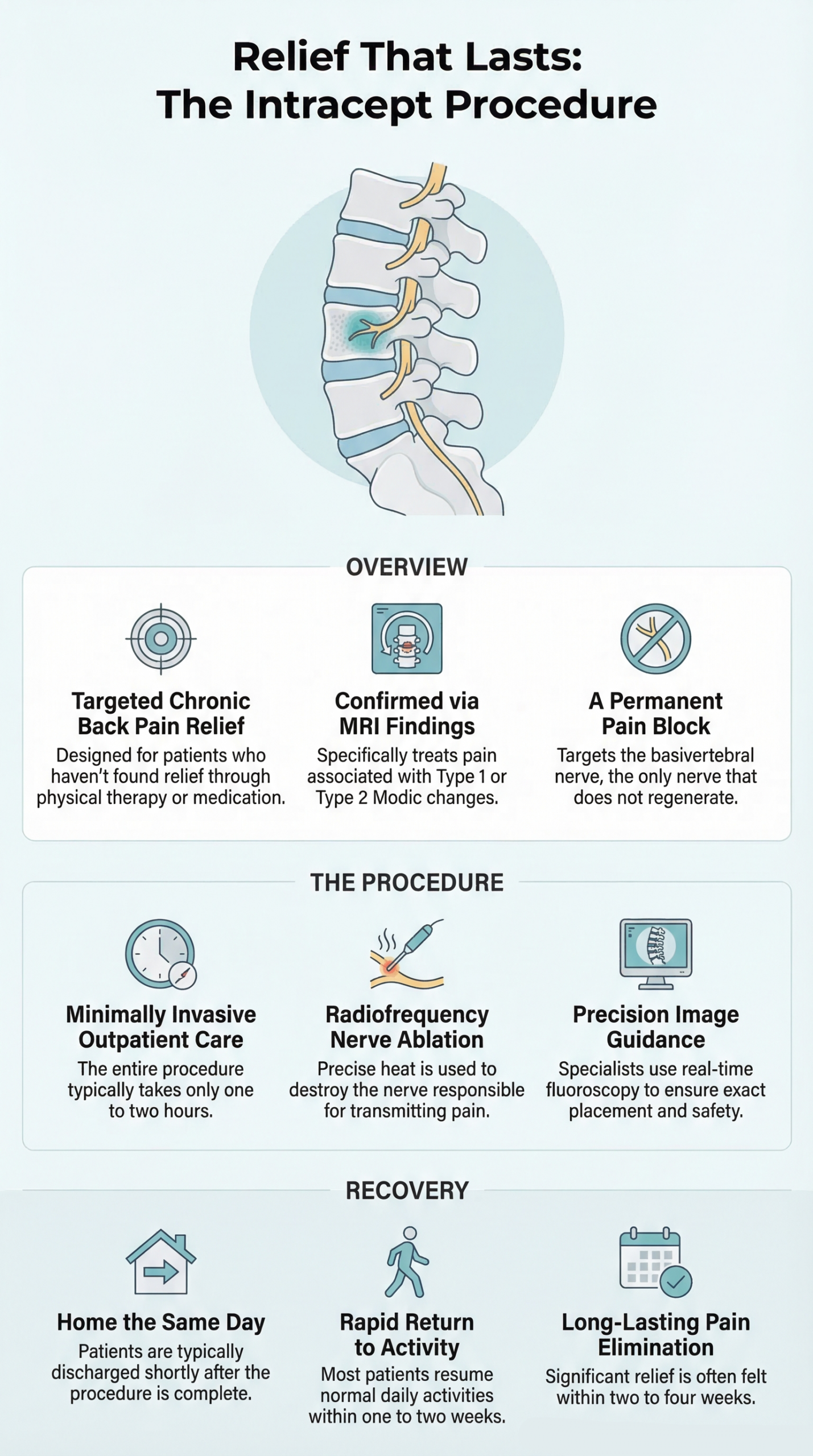
Basivertebral Nerve Ablation, also referred to as the Intracept Procedure, is a minimally invasive outpatient procedure used to help relieve or eliminate low back pain by using radiofrequency energy to target the basivertebral nerve, commonly associated with chronic low back pain.
IS BASIVERTEBRAL NERVE ABLATION RIGHT FOR ME?
Basivertebral nerve ablation is right for those who are suffering from chronic lower back pain that has not responded to treatments such as physical therapy or medications, often associated with lumbar radiculopathy. Patients are often evaluated based on their medical history, symptoms, and diagnostic imaging to determine their eligibility for the treatment.
WHAT CONDITIONS DOES BASIVERTEBRAL NERVE ABLATION TREAT?
Basivertebral Nerve Ablation treats chronic low back pain in those who have previously tried other more conservative options like physical therapy and medication management but have Type 1 or Type 2 Modic changes shown on an MRI. Type 1 changes are typically associated with an active inflammatory process in the bone marrow and endplate regions and may be linked to conditions such as degenerative joint disease. Type 2 changes are thought to represent a healing response following the inflammatory process seen in Type 1 changes. The inflammatory response has subsided, and fatty replacement of the bone marrow occurs as part of the healing process. It’s important to note that the presence of Modic changes on an MRI does not in itself establish a diagnosis. The correlation between the MRI findings and clinical symptoms is essential for accurate diagnosis and appropriate management of back pain.
HOW DOES THE INTRACEPT PROCEDURE WORK TO CONTROL MY LOW BACK PAIN?
Intracept uses radiofrequency heat to ablate and destroy the basivertebral nerve located within the vertebrae of the spine. This energy ablates the nerve and thus eliminates the transmission of pain signals to the brain.
What are the Benefits of Basivertebral Nerve Ablation?
The primary benefit of basivertebral nerve ablation is significant and long-lasting relief from chronic lower back pain. This minimally invasive procedure typically involves a shorter recovery time compared to traditional spine surgeries, allowing patients to resume normal activities more quickly. It is particularly beneficial for patients experiencing chronic musculoskeletal pain.
What are the Risks and Potential Complications?
As with any medical procedure, basivertebral nerve ablation carries some risks, including infection, bleeding, and nerve damage. However, serious complications are rare, and the procedure is generally considered safe when performed by a qualified specialist.
PREPARING FOR TREATMENT
WHAT CAN I EXPECT DURING THE INTRACEPT PROCEDURE?
Once the site is prepped for the procedure, local anesthesia will be applied to the targeted site to further reduce pain. Under fluoroscopy, using a transpedicular approach, an introducer cannula will slowly be advanced to enter the pedicle of the vertebral body. A curved cannulais then used to create a path to the base of the basivertebral nerve. A radiofrequency probe is inserted into the curved channel leading to the nerve. Radiofrequency heat from the probe is used to ablate the nerve and interrupt the pain signals being sent to the central nervous system. The basivertebral nerve is the only nerve that does not regenerate in the body. This means long-lasting pain relief for patients and the unlikelihood of having to repeat procedures in the future.
How Long Does the Procedure Take and What is the Recovery Time?
The procedure usually takes about one to two hours to complete. Most patients can return home the same day and resume light activities within a few days, with a full recovery typically occurring within a few weeks.
AFTER TREATMENT
WHAT CAN I EXPECT AFTER THE PROCEDURE?
Following basivertebral nerve ablation, patients should prioritize rest, and gradually return to normal activities. It is important to keep the incision site clean and monitor for signs of infection such as redness, swelling, or fever. Gentle physical activity, like walking, is encouraged to maintain circulation, but patients should avoid heavy lifting, strenuous exercise, smoking, alcohol, and prolonged inactivity. Driving should be avoided until cleared by a doctor. If severe pain or unusual symptoms occur, contact your doctor immediately
How Soon Can Patients Expect Relief After the Procedure?
Patients often begin to experience pain relief immediately, with significant pain relief occurring within two to four weeks following the procedure. Continued improvement in pain and function can occur over several months as the body heals and inflammation decreases.


