
Trigeminal Neuralgia
Trigeminal neuralgia is a chronic pain condition caused by irritation or dysfunction of the trigeminal nerve, which is responsible for transmitting facial sensations to the brain. It is characterized by episodes of intense, sudden facial pain that can significantly impact daily life and may be associated with neuropathy.
Evaluating Your Condition
WHAT CAUSES TRIGEMINAL NEURALGIA?
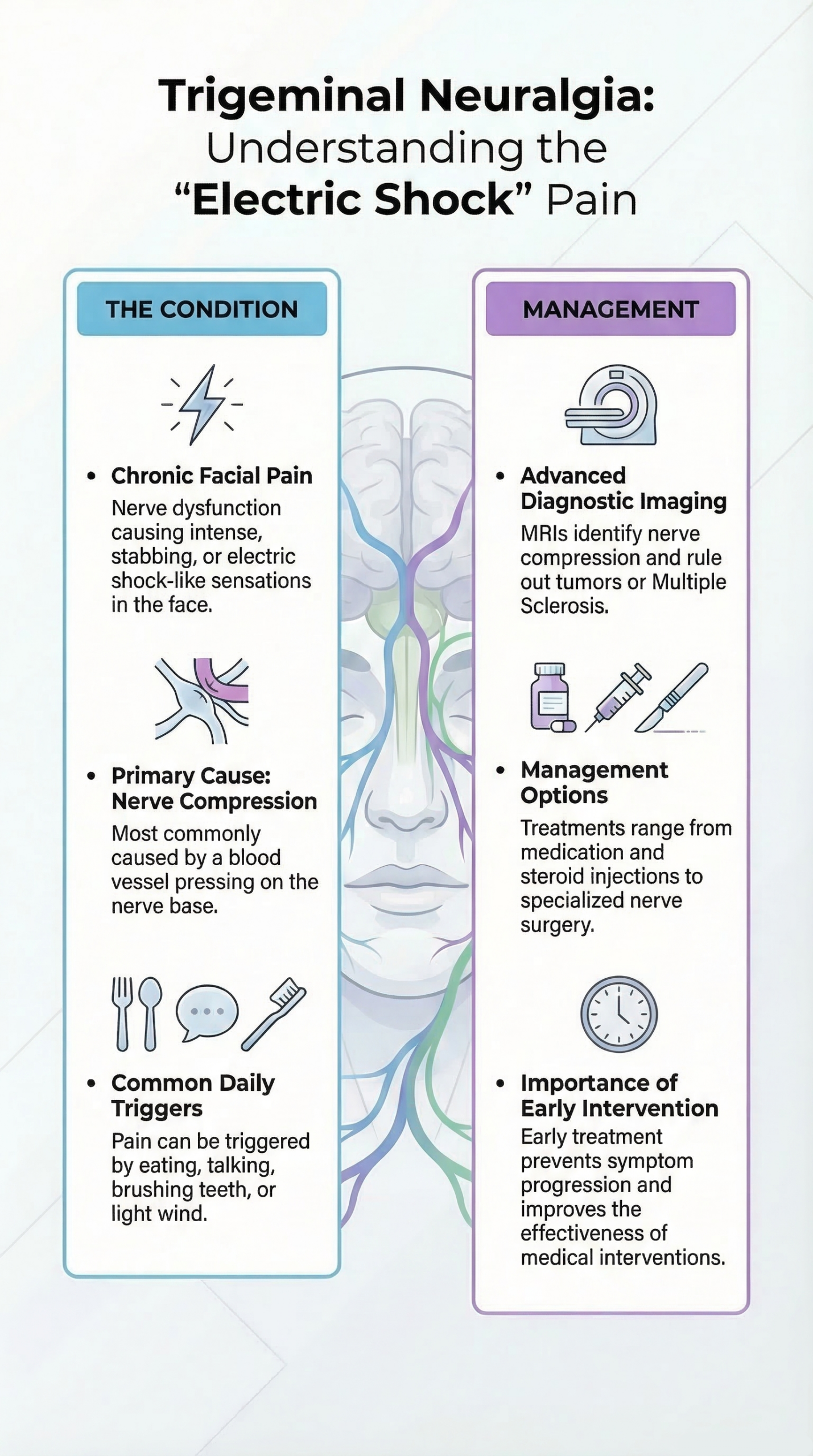
The most common cause of trigeminal neuralgia is contact between the trigeminal nerve and a blood vessel at the base of your skull. The blood vessel exerts pressure on the trigeminal nerve causing it to send pain signals to the brain. Other possible causes include:
- Trauma to the nerve due to surgery, facial injury, or dental procedures.
- Multiple Sclerosis (MS), which is a condition that damages the myelin sheath (the protective covering of nerves), potentially leading to trigeminal nerve irritation.
- Tumors that compress or displace the trigeminal nerve.
WHAT ARE THE SYMPTOMS OF TRIGEMINAL NEURALGIA?
Trigeminal neuralgia is characterized by sudden, severe facial pain that is often described as an electric shock or stabbing sensation. This pain usually affects one side of the face and can involve the cheek, jaw, forehead, or area around the eye. The episodes of pain are typically brief, lasting seconds to minutes, but can occur in rapid succession or clusters over hours or days.
In some cases, those suffering from trigeminal neuralgia may experience a constant, less intense burning or aching sensation in the affected areas between episodes. Everyday activities such as eating, talking, brushing teeth, or exposure to light touch or wind can trigger the pain. As the condition progresses, these episodes may become more frequent and severe, significantly impacting quality of life. These symptoms can sometimes overlap with other chronic pain conditions such as headaches & migraines.
DIAGNOSING TRIGEMINAL NEURALGIA
Diagnosis begins with a detailed medical history and physical examination to assess the pattern and triggers of pain. Pain Management Physicians often focus on ruling out other potential causes of facial pain, such as dental problems or sinus infections. Advanced imaging techniques, such as MRI, are commonly used to identify whether a blood vessel is compressing the trigeminal nerve or to exclude other conditions like multiple sclerosis or tumors. In cases where the diagnosis is unclear, EMG/NCS may also be used to evaluate nerve function and rule out other conditions that mimic trigeminal neuralgia.
WHEN SHOULD I CONSIDER GETTING TREATMENT?
Treatment should be considered when facial pain becomes persistent, frequent, or begins to interfere with daily activities like eating, speaking, or personal hygiene. If symptoms do not improve with over-the-counter pain medications or self-care measures, or if they worsen over time, seeking medical attention is crucial. Early treatment can prevent further progression and improve the effectiveness of interventions, including medication management.
Common Treatments Available for Trigeminal Neuralgia
Steroid Injections
Medication Management
Radiofrequency Ablation
Microvascular Decompression Surgery
Spinal Cord Stimulation


