
Greater Trochanteric Bursitis
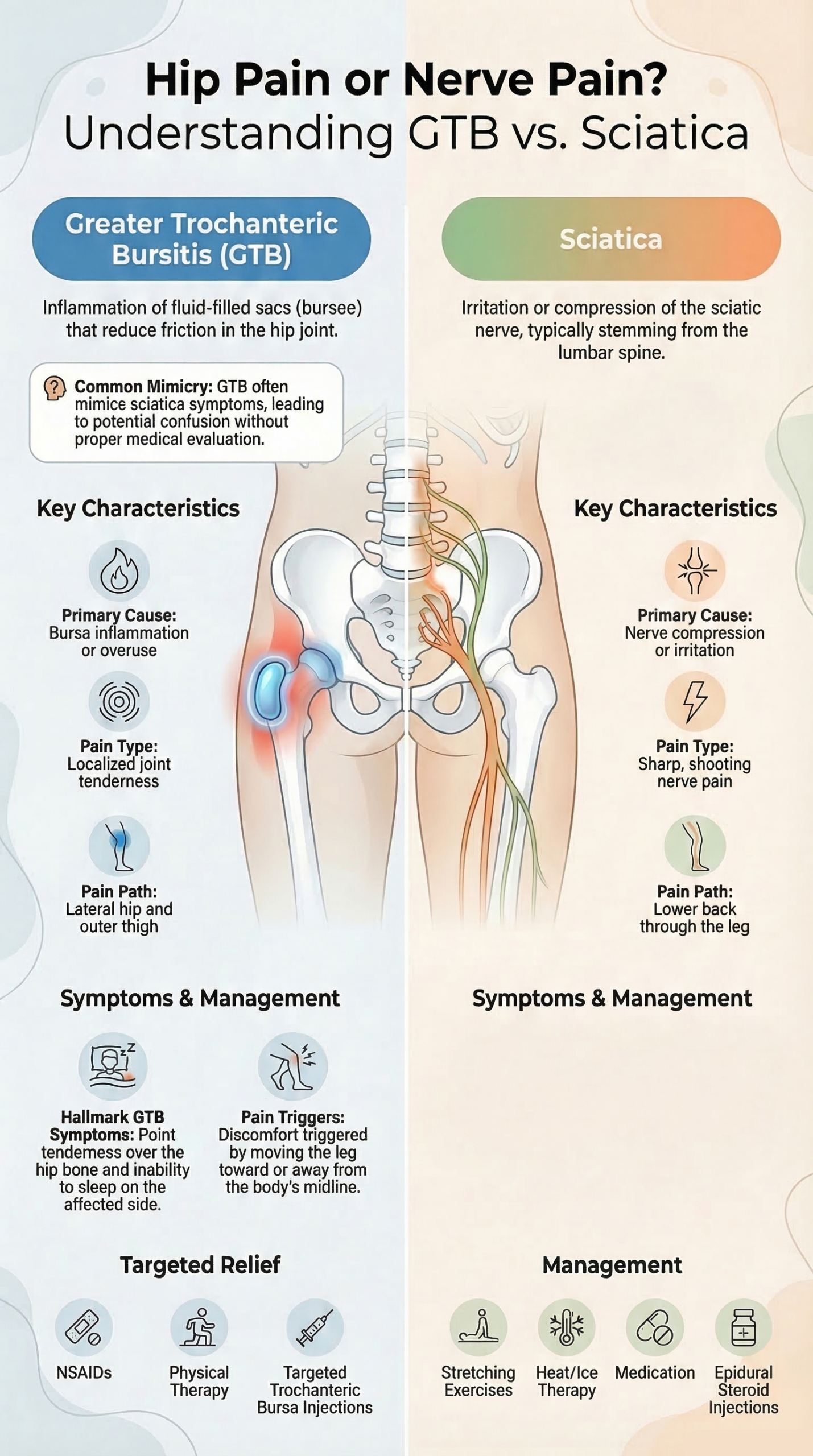
Trochanteric bursitis is a common pain condition that frequently presents as pain in the lateral hip and may radiate down the leg (mimicking sciatica), and is often associated with musculoskeletal pain. The trochanteric bursa lies between the greater trochanter and the tendon of the gluteus medius and the iliotibial tract. Pain is distinct and well localized to the area over the trochanter. Trochanteric bursitis may be hallmarked by an inability to sleep on the side of the affected hip.
EVALUATING YOUR CONDITION
WHAT CAUSES GREATER TROCHANTERIC BURSITIS?
Trochanteric bursitis often exists with arthritis of the hip, back and SI (sacroiliac) joint disease, commonly related to degenerative joint disease, and can be associated with a gait disturbance. It can occur from both acute trauma (i.e. falls) and repeated microtrauma (i.e. overuse injury). Other considerations include age, poor posture, weak musculature, and prolonged pressure (i.e. prolonged sitting or lying on one side).
WHAT ARE THE SYMPTOMS OF GREATER TROCHANTERIC BURSITIS?
Greater Trochanteric Bursitis is characterized by specific symptoms that are primarily focused around the lateral aspect of the thigh. Individuals that suffer from this condition often experience point tenderness directly over the greater trochanter, which is the bony prominence on the upper thigh. This tenderness is especially noticeable when the affected leg undergoes movements such as passive adduction (movement towards the body’s midline) and abduction (movement away from the body’s midline), as well as when performing active resisted abduction, where the pain is reproduced. It is also important to note that there shouldn’t be any loss of sensation in the affected area, which suggests that nerve function is still normal even though there is pain and discomfort.
Common Questions
Can SI joint dysfunction cause hip bursitis?
While SI joint dysfunction primarily affects the sacroiliac joint in the lower back, it can indirectly contribute to hip bursitis due to an altered gait. The pain and instability in the sacroiliac joint may lead individuals to adjust their walking pattern, which can potentially place undue stress on the hip area and the bursae around the greater trochanter, which will increase the risk of inflammation in these areas.
Can trochanteric bursitis cause sciatica?
Trochanteric bursitis does not directly cause sciatica, as sciatica is typically caused by issues with the lumbar spine such as herniated discs or spinal stenosis impacting the sciatic nerve. However, the pain from trochanteric bursitis can sometimes mimic sciatica symptoms because both conditions can produce pain in similar areas of the lower body, leading to confusion in diagnosis without proper medical evaluation.
What is the difference between sciatica and bursitis?
Sciatica and bursitis differ both in their causes and the locations of pain. Sciatica is commonly related to lumbar radiculopathy. Sciatica is caused by irritation or compression of the sciatic nerve and often results in sharp, shooting pain that travels from the lower back down through the leg. Bursitis involves inflammation of the bursae, which are fluid-filled sacs that reduce friction in joints. This leads to localized pain and tenderness that is often experienced in joints like the hip, shoulder, or elbow.
COMMON TREATMENTS AVAILABLE FOR GREATER TROCHANTERIC BURSITIS
- NSAIDS
- TROCHANTERIC BURSA INJECTIONS
- PHYSICAL THERAPY


