
Non-Surgical Alternatives for Neck Pain
Neck pain affects millions of people, often leading to discomfort, reduced mobility, and a significant impact on quality of life related to neck pain and musculoskeletal pain conditions. While surgical intervention is sometimes necessary, substantial relief can often be achieved through non-surgical treatments. Understanding these alternatives can enable you to make informed decisions about your care, potentially avoiding the need for surgery.
Why You Should Consider Non-Surgical Methods Before Surgery
Choosing a non-surgical approach to address neck pain offers numerous benefits. These treatments typically present fewer risks, involve shorter recovery periods, and are less invasive compared to surgery, especially for conditions like cervical radiculopathy. A non-surgical strategy aims to alleviate neck pain while preserving the natural alignment of the cervical spine. These methods often lead to a faster return to daily activities and reduce the likelihood of long-term complications.
Cervical Epidural Steroid Injections
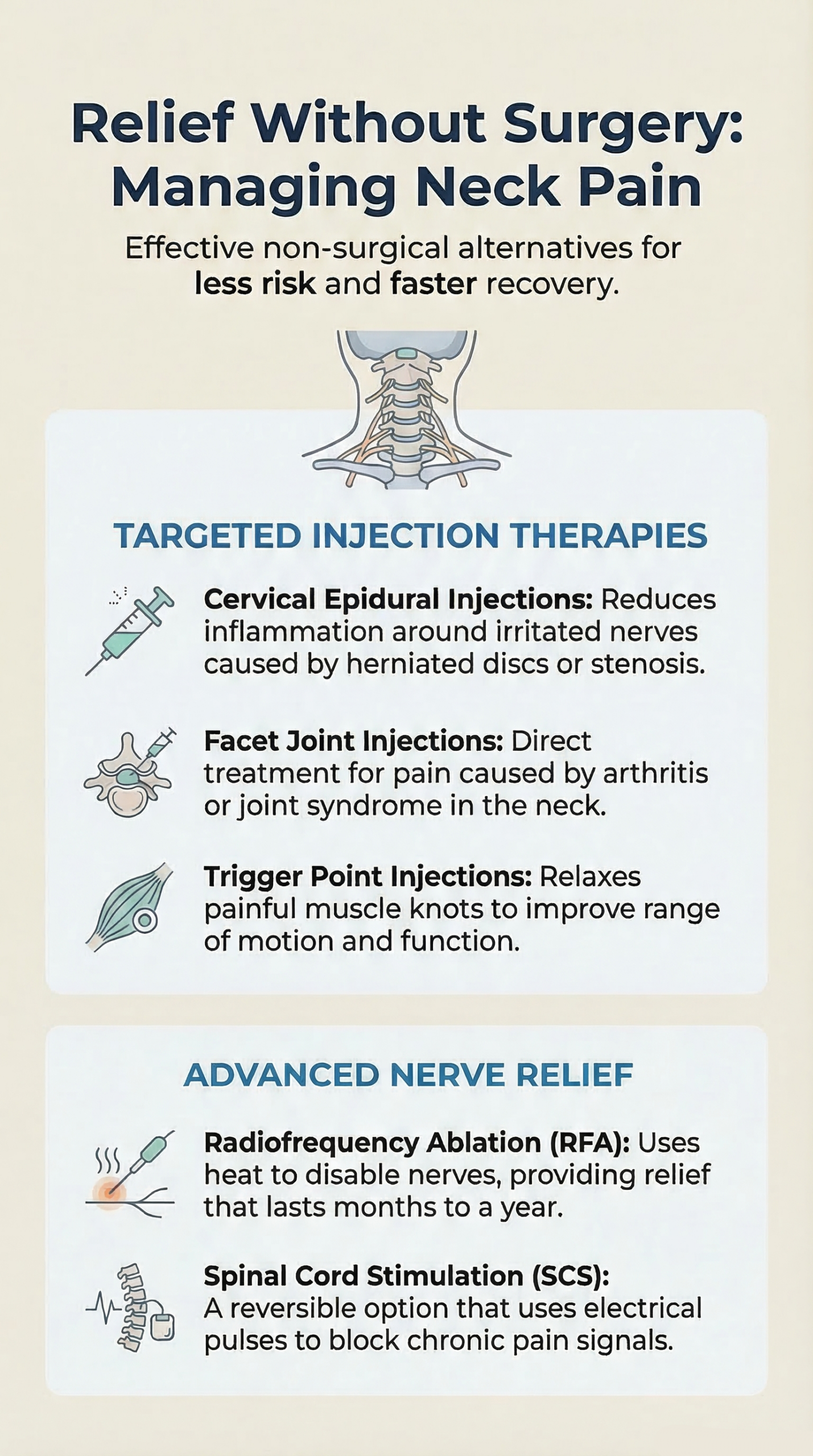
Cervical Epidural Steroid Injections are used to manage neck pain associated with conditions such as cervical disc herniation or spinal stenosis, often related to cervical disc herniations. These injections deliver corticosteroids into the epidural space of the cervical spine to reduce inflammation around irritated nerves. This treatment is particularly effective in alleviating pain that radiates down the arms, improving both comfort and mobility for patients dealing with nerve compression. Relief can last from a few weeks to several months, depending on the individual case.
Cervical Facet Joint Injections
Cervical Facet Joint Injections target the small joints in the neck that can become inflamed due to arthritis or injury, commonly associated with degenerative joint disease. This procedure involves injecting a corticosteroid or anesthetic directly into the facet joints in the cervical spine. This method provides targeted pain relief and can help in diagnosing the specific source of pain, offering a clearer path for further treatment planning. Patients who benefit from these injections may also benefit from radiofrequency ablation, which can provide longer-lasting relief.
Trigger Point Injections
Trigger Point Injections are used to treat myofascial pain syndrome, a condition characterized by tight, painful knots in the muscles of the neck. These injections involve administering a local anesthetic, sometimes combined with a corticosteroid, directly into the trigger points. This can help relax the muscle fibers and reduce pain.
Trigger Point Injections are particularly beneficial for patients whose neck pain is due to muscle tension or overuse. Beyond reducing pain, this treatment can also enhance the neck’s range of motion and improve overall muscle function. The procedure is minimally invasive, with most patients experiencing immediate relief and only minimal discomfort during the injection. This treatment is particularly effective for managing muscle spasms and musculoskeletal pain.
Radiofrequency Ablation (RFA)
Radiofrequency Ablation (RFA) is a highly effective treatment for managing neck pain, especially in patients with facet joint arthritis or chronic cervical pain. This procedure uses radiofrequency energy to heat and disable specific nerves responsible for transmitting pain signals. By targeting these nerves, RFA provides prolonged pain relief, often lasting several months to a year. It is a minimally invasive option typically performed on an outpatient basis, allowing patients to return home the same day. RFA is often used for chronic pain conditions related to joint pain and nerve irritation.
Spinal Cord Stimulation (SCS)
Unlike the other options covered, Spinal Cord Stimulation (SCS) involves a minimally invasive surgical procedure. However, this treatment is especially beneficial for patients who have not found relief through other non-surgical methods and offers a long-term solution for managing persistent pain.
The procedure is reversible, and trial stimulators can be used to test the effectiveness before permanent implantation, ensuring that patients do not undergo a procedure that fails to provide relief. SCS involves the implantation of a device that sends electrical pulses to the spinal cord, helping to block pain signals sent to the brain. SCS can be a life-changing option for those with chronic neck pain, leading to a much higher quality of life.This treatment is especially beneficial for patients with chronic neuropathy or nerve-related pain.
Conclusion
Neck pain is a challenging condition that can significantly affect your daily life. However, surgery is not always necessary. By exploring and utilizing non-surgical treatment options, those suffering from neck pain can find relief and improve their quality of life.
It is essential to consult with a pain management doctor to explore these options and determine the most suitable approach for your specific condition. Not only do these non-surgical treatments offer significant improvements in quality of life for those suffering from chronic neck pain, but they can also help avoid potentially unnecessary surgical procedures that require longer recovery times.
At Capitol Pain Institute, we are committed to helping you live a better life through the practice of pain management. If you are experiencing neck pain and want to explore non-surgical treatment options, consulting a pain management specialist is essential. Treatments such as injections and medication management can help you achieve lasting relief while avoiding the risks associated with surgery..


