
Pain Management for the Elderly
When the Elderly Should Seek Pain Management
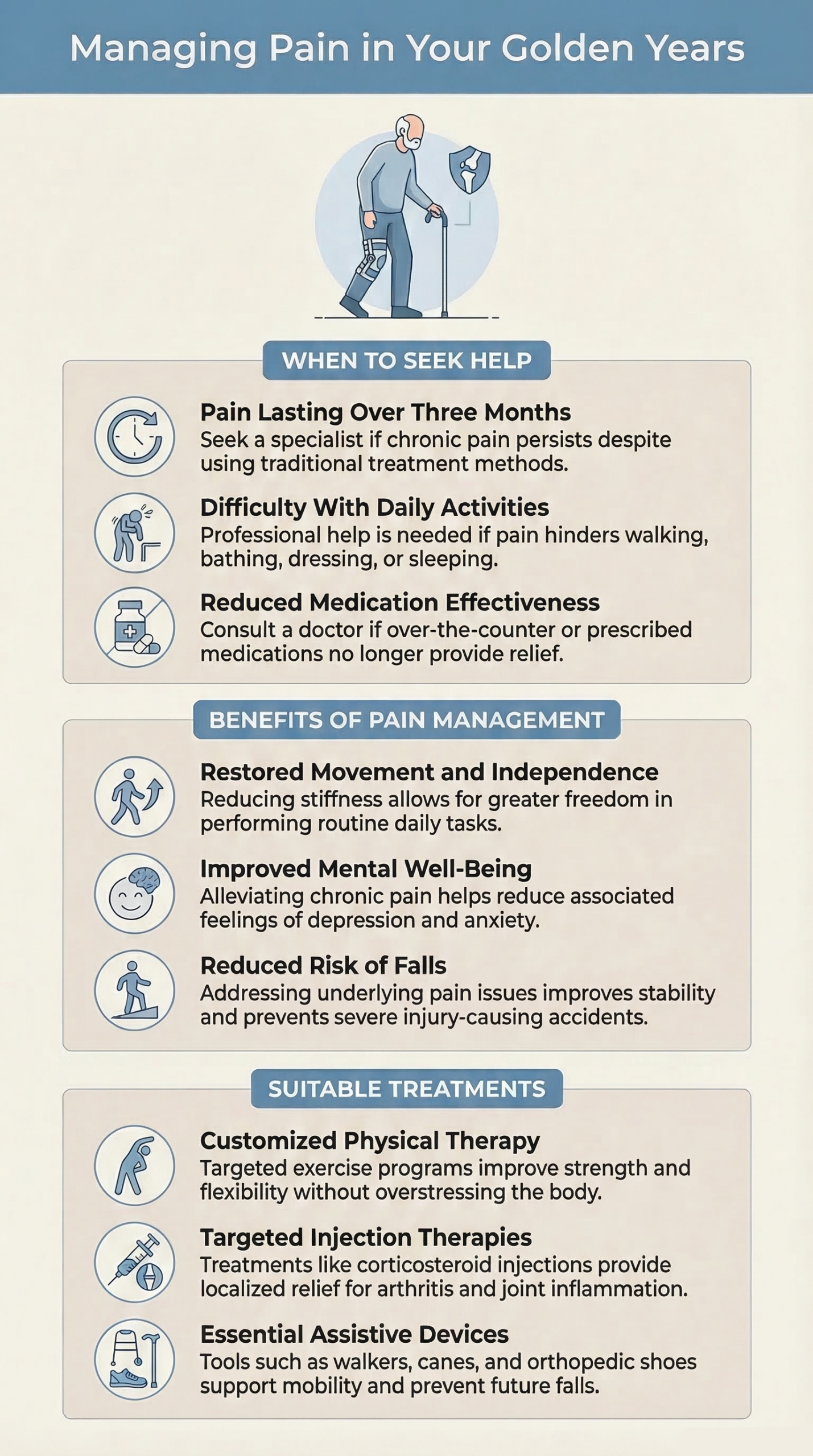
As individuals age, they often experience persistent pain that may not respond to traditional treatment methods. Elderly patients should consider consulting a pain management doctor if they encounter chronic pain lasting more than three months despite treatment, often related to musculoskeletal pain or joint pain. Pain that hinders daily activities such as walking, bathing, or dressing, or pain that interferes with the ability to sleep or stay asleep, is also a signal to seek help.
If over-the-counter or prescribed medications no longer provide adequate relief, or if the pain causes increased reliance on others for routine tasks, it is time to seek professional help. A pain management specialist can provide a thorough evaluation and develop a personalized treatment plan to address conditions such as arthritis or chronic pain in elderly patients.
How Pain Management Helps the Elderly
Pain management plays a pivotal role in enhancing the quality of life for elderly individuals. Effective pain management can restore movement and reduce stiffness, allowing for greater independence. Chronic pain can lead to depression and anxiety, which makes alleviating pain an important part of improving overall mental well-being, often associated with long-term neuropathy or nerve-related pain. With tailored pain management strategies, elderly patients may rely less on pain medications, reducing the risk of side effects and dependency.
Proper pain management can also prevent complications such as falls, which are more common in the elderly and can lead to severe injuries.If an elderly patient has experienced a fall, pain management becomes crucial in the recovery process. Effective pain management can aid in the reduction of pain and inflammation, promote healing, and improve mobility. This comprehensive approach helps elderly patients regain their independence and reduces the likelihood of future falls by addressing the underlying pain issues that contributed to the initial incident.
Suitable Treatments for the Elderly
As people age, it becomes increasingly important to focus on specific types of treatments that cater to their unique needs and health considerations. The elderly often have multiple health conditions and may be taking various medications, so treatments must be carefully selected to avoid adverse interactions and side effects.
Physical Therapy
Physical therapy involves customized exercise programs designed to improve strength, flexibility, and mobility without placing undue stress on the body. It is an essential component of pain management for the elderly, helping to maintain and enhance physical function.
Injection Therapies
Injection therapies, including corticosteroid injections and nerve blocks, provide targeted pain relief with minimal systemic impact. These treatments can be particularly effective for localized pain and inflammation. For example, corticosteroid injections can reduce inflammation in joints and soft tissues, providing relief from conditions like arthritis. Nerve blocks can interrupt pain signals from specific nerves, offering significant relief for conditions such as neuropathic pain.
Other effective injection therapies for the elderly include trigger point injections, which can relieve muscle pain and tension, and hyaluronic acid injections, which can help lubricate joints and alleviate pain from osteoarthritis. These treatments are minimally invasive and can provide substantial relief with fewer side effects compared to systemic medications.
Complementary Therapies
Complementary therapies like acupuncture, massage therapy, and relaxation techniques such as yoga and meditation can also be beneficial in managing chronic pain. These therapies offer holistic approaches to pain management that can enhance overall well-being and can sought alongside other pain management treatments. Acupuncture can stimulate specific points on the body to relieve pain and improve function, while massage therapy can reduce muscle tension and improve circulation. Yoga and meditation can promote relaxation and reduce stress, contributing to overall pain relief.
Assistive Devices
Beyond typical pain management treatments, it’s important to make use of assistive devices like walkers and canes, which can help reduce pain and improve mobility. These tools are essential for maintaining independence and preventing falls. Devices such as orthopedic shoes, braces, and ergonomic supports can also provide relief and support for various musculoskeletal conditions.
Conclusion
In conclusion, pain management is essential for the elderly to maintain their independence and quality of life. By recognizing when to seek help, understanding the benefits of pain management, and choosing appropriate treatments, elderly patients can lead more comfortable and active lives. If chronic pain is impacting your daily activities or overall well-being, consider consulting a pain management specialist to explore the best options for your needs.


