
Comparing Pain Management and Physiatry
When you are dealing with ongoing pain, there are two typical medical practices that can help you: Pain Management and Physiatry. It is important to understand what these two fields focus on so that you can make the right choice when it comes to long term pain management. While both practices share common goals such as alleviating discomfort and enhancing functional abilities, their methodologies, and areas of specialization offer unique perspectives on patient care.
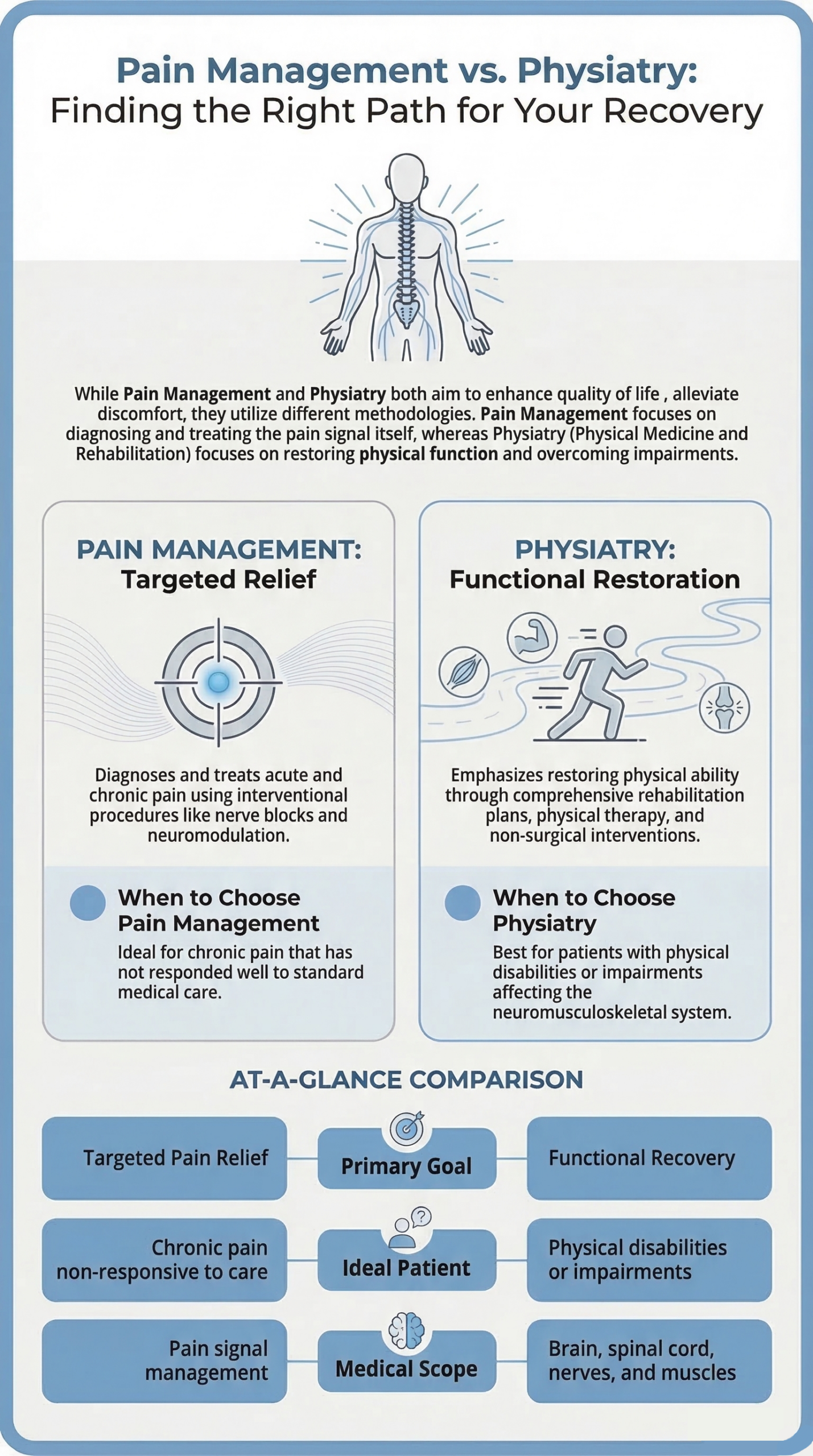
Pain management primarily focuses on the diagnosis, treatment, and management of pain, utilizing a wide range of interventions. In contrast, physiatry, or physical medicine and rehabilitation, emphasizes restoring function to individuals affected by physical impairments or disabilities. Despite their similarities, choosing between these specialties depends on the patient’s specific conditions and needs.
What is Physiatry?
Physiatry is a branch of medicine that focuses on restoring your functional ability and quality of life, especially if you are experiencing physical impairments or disabilities. This specialty focuses on the comprehensive management of conditions that affect the brain, spinal cord, nerves, bones, joints, ligaments, muscles, and tendons.
Physiatrists conduct thorough evaluations to develop comprehensive treatment plans that are targeted at rehabilitation and restoring your physical abilities. These plans may include physical therapy, medication, and non-surgical interventions. Overall, they focus on the patient’s overall functional improvement.
What is Pain Management?
Pain management is a medical specialty that is focused on the evaluation, diagnosis, and treatment of pain. Specialists in pain management, often known as pain management doctors, will utilize an array of techniques to mitigate your pain and improve your quality of life. Pain management is particularly helpful for those who are suffering from persistent pain and offers advanced treatments and therapies specifically designed to manage chronic pain conditions effectively, where other more traditional medical treatments may have fallen short.
We cover the purpose of pain management and other important details in our articles on “What is a Pain Management Physician”, “What does a Pain Management Doctor do” and “What you should expect at your pain management visit”.
Pain management involves a multidisciplinary approach that may include medication, physical therapy, and interventional procedures such as nerve blocks or injections. Other more advanced procedures such as DRG Stimulation and Spinal Cord Stimulation are also used for more complex pain cases. This comprehensive approach aims to treat pain that is acute, chronic, or complex in nature by using the best treatment option for each individual treatment.
When and Why to Choose a Pain Management Doctor Over a Physiatrist
Choosing between a pain management doctor and a physiatrist often depends on the nature and complexity of your condition. If you are experiencing chronic pain, especially pain that has not responded well to standard treatments, you may benefit more from consulting a pain management specialist over a physiatrist. Pain management doctors are adept at navigating the complexities of chronic pain conditions, providing targeted therapies that focus specifically on pain relief and management. In cases where pain is significantly impacting your quality of life and daily routine, a pain management specialist’s expertise becomes invaluable.
Conclusion
While both physiatry and pain management play crucial roles in enhancing patient care, their specific focuses and methodologies cater to different patient needs. Physiatry offers a broad approach to rehabilitation and functional recovery and is ideal for patients with disabilities or physical impairments. Pain management provides specialized care for those suffering from acute or chronic pain and is focused on alleviating pain and improving quality of life. Understanding the distinct offerings of each specialty can help guide you when it comes to choosing the most appropriate care for your specific condition, ultimately leading to better health outcomes and improved well-being.


