
Exploring Non-Surgical Options for Knee Pain Relief
Knee pain can be a debilitating condition, affecting your mobility and quality of life. While many consider surgery to be their only option for relief, there are several non-surgical alternatives that can provide relief and improve knee function. Non-surgical and minimally invasive approaches are highly effective for addressing chronic knee pain, often related to musculoskeletal pain, bypassing the complexities and risks of surgical procedures. This guide will introduce you to various non-surgical methods that can significantly alleviate knee discomfort, highlighting reasons why these treatments may be a more suitable option for managing knee pain.
Why You Should Consider Non-Surgical Methods Before Knee Surgery
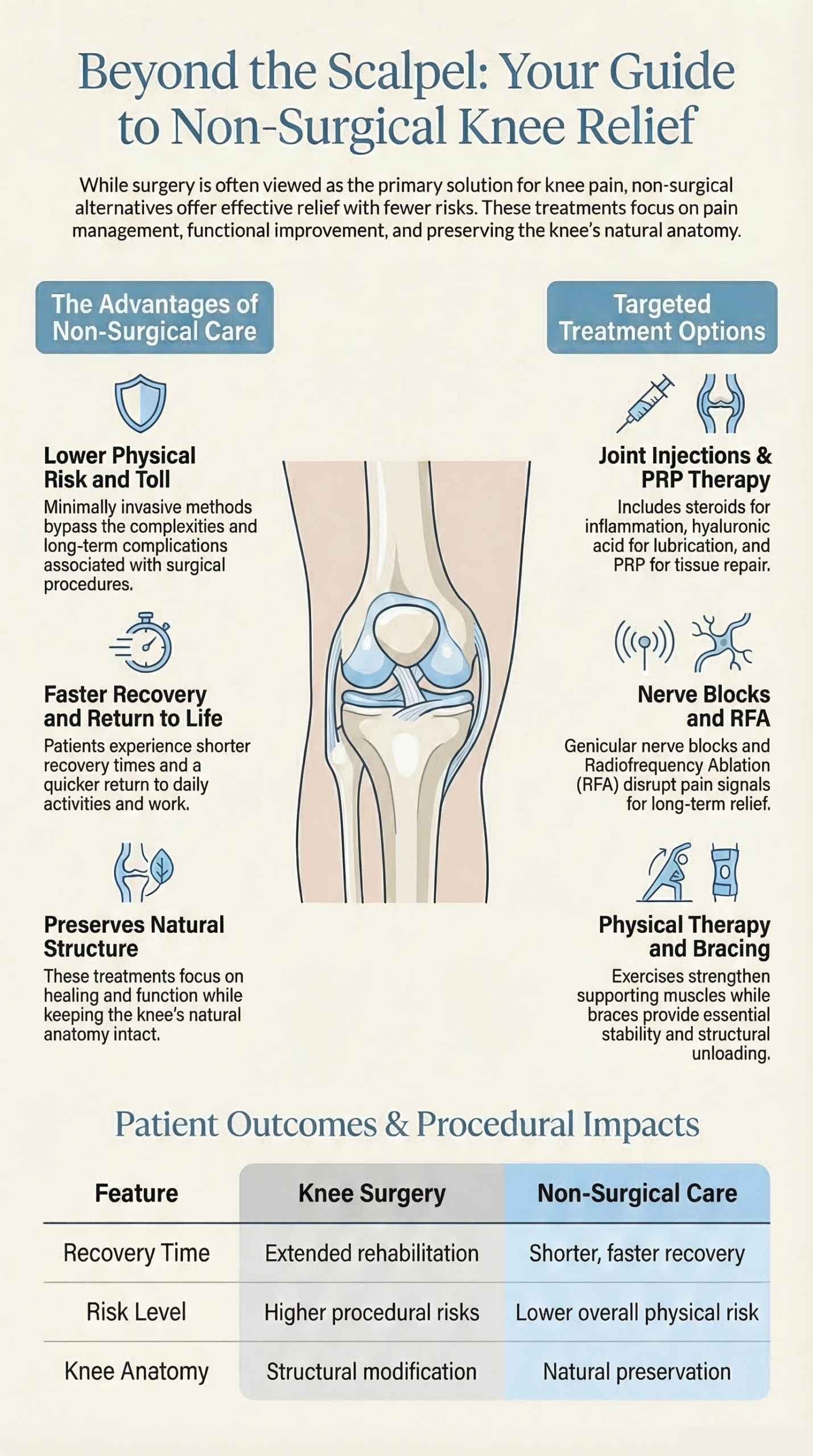
Opting for non-surgical treatments to address knee pain offers numerous benefits, particularly when considering the physical toll knee surgery can take. These alternative methods are generally associated with lower risks and shorter recovery times compared to surgical interventions. They provide a less invasive way to alleviate knee pain, focusing on pain relief and functional improvement while preserving the knee’s natural structure.
By choosing non-surgical options, patients often experience a quicker return to daily activities and face fewer long-term complications. These treatments present a sustainable and efficient approach to pain management, circumventing the potential risks, significant stress, and extended rehabilitation periods that often accompany knee surgery. For many dealing with knee discomfort, these alternative approaches are not only viable but preferable, offering effective relief without the complexities that surgery brings.
Joint Injections: Steroids and Hyaluronic Acid
Joint injections are a common non-surgical treatment for knee pain, particularly when dealing with arthritis. Steroid injections can reduce inflammation and provide quick pain relief, whereas hyaluronic acid injections act as a lubricant, improving knee function and easing discomfort. These treatments are minimally invasive and can offer temporary relief, allowing for increased mobility and comfort during typical daily activities. Steroid injections may offer relief for several weeks to months, while hyaluronic acid can improve conditions for up to six months or more.
Effective Medications for Knee Pain Management
For managing knee pain, a range of non-opioid medications are available. These include anti-inflammatory drugs and over-the-counter pain relievers. These medications can reduce inflammation and alleviate pain, serving as a first-line treatment for many patients. They are often used in combination with other therapies for a more holistic approach to pain management. Non-opioid medications, such as NSAIDs and acetaminophen, are effective for temporary relief and work best when combined with physical therapy or injections. These medications are often combined with medication management plans for long-term pain control.
Genicular Nerve Block and Radiofrequency Ablation (RFA)
Genicular Nerve Blocks and RFA are targeted treatments for knee pain. The nerve block provides temporary relief by numbing the affected area, while RFA offers a more long-term solution by disrupting pain signals from specific nerves. These treatments are especially beneficial for those suffering from chronic knee pain and can be an alternative for those not suitable for surgery. Ideal candidates are those who haven’t responded well to other treatments but want to avoid surgery. Some patients may require repeat procedures for sustained pain relief.
Platelet-Rich Plasma (PRP) Therapy: A Regenerative Approach
PRP therapy is an innovative treatment that uses the patient’s own blood platelets to promote healing in the knee. This treatment has gained popularity for its potential to repair damaged tissues and reduce pain, making it a favorable option for those seeking non-surgical treatments. The process involves drawing the patient’s blood, concentrating the platelets, and then reinjecting them into the knee.
Bracing for Knee Support and Pain Relief
Knee braces provide support and stability to the knee joint, helping to alleviate pain and improve function. They are particularly useful for managing symptoms of conditions like knee osteoarthritis or following a knee injury. Bracing is a non-invasive way to control pain and facilitate participation in physical activities and therapy. Different types of braces include unloader braces for osteoarthritis and functional braces for post-injury support.
Additionally, knee braces play a crucial role in preventive care, particularly for individuals prone to knee injuries or those with weakened knee structures. By offering enhanced stability, these braces can prevent the knee from moving into harmful positions during physical activities, thereby reducing the risk of injury.
Braces can also be used as a part of a rehabilitation program, gradually conditioning the knee to withstand regular activities after an injury or surgery. Their ability to be adjusted for varying levels of support makes them a versatile tool in both the treatment and prevention of knee injuries, ultimately contributing to long-term knee health and mobility.
Physical Therapy: A Cornerstone of Knee Pain Treatment
Physical therapy is crucial in treating knee pain without surgery. It includes exercises and techniques to strengthen knee muscles, enhance flexibility, and reduce pain. Physical therapy is often a key component of a comprehensive knee pain treatment plan, helping patients improve mobility and function. Regular participation and gradual increase in exercise intensity are key to successful knee rehabilitation.
Physical therapy also plays a vital role in educating patients about knee health and injury prevention. Therapists provide valuable guidance on proper movement patterns and body mechanics, which are essential in avoiding future knee problems. This educational aspect empowers patients to take an active role in their own knee health, making informed decisions about daily activities and exercise routines. By incorporating this knowledge into their everyday lives, patients can not only recover more effectively from current knee issues but also minimize the risk of future knee injuries and chronic knee conditions.
Conclusion
The range of non-surgical treatments available for knee pain provides effective and safe alternatives to knee surgery. From joint injections and nerve blocks to PRP therapy and physical therapy, these methods offer substantial relief from pain with minimal risks. Consulting with a pain management doctor is important to determine the most suitable treatment approach for your specific knee condition. Non-surgical treatments not only significantly improve the quality of life for those suffering from knee pain but also provide a pathway to recovery that avoids the potential risks and lengthy recovery associated with knee surgery.
At Capitol Pain Institute, we are committed to helping you live a better life through practice of pain management. If you are suffering from knee pain and are looking for non-surgical treatment options, we are here to help. Please reach out to us at one of our pain management clinic locations and schedule a consultation today.


