
Understanding Intrathecal Pumps in Cancer Pain Management
Cancer pain can significantly impact a patient’s quality of life, making effective pain management a critical aspect of overall care. Among various pain management strategies, intrathecal pumps have emerged as a valuable option for many patients. These devices deliver pain medication directly to the spinal fluid, offering targeted relief for patients suffering from chronic pain or severe nerve-related pain such as neuropathy. This article explores the concept of intrathecal pumps, their benefits in cancer pain management, addresses common questions, and provides insights into determining their suitability for individual patients.
What are Intrathecal Pumps?
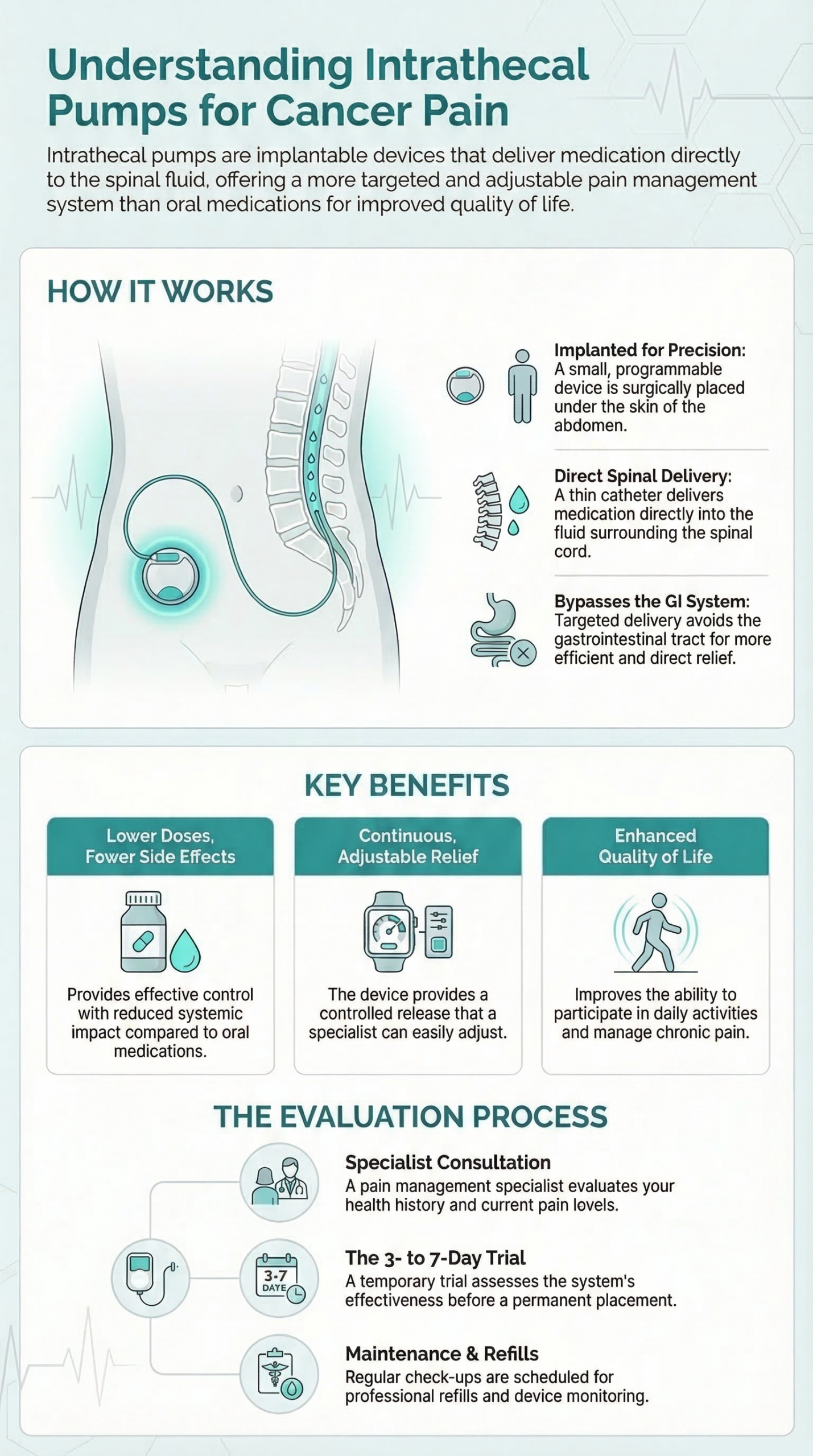
Intrathecal pumps are small, programmable devices surgically implanted under the skin of the abdomen. They are connected to a catheter that delivers pain medication directly into the intrathecal space around the spinal cord. This method allows for lower doses of medication, as it bypasses the gastrointestinal system and delivers pain relief directly to the nervous system. Common medications used in these pumps include opioids and local anesthetics, which are effective in controlling both chronic and acute pain associated with cancer.
How Intrathecal Pumps Aid in Cancer Pain Management
Intrathecal pumps provide a continuous and controlled release of medication, which can be adjusted according to the patient’s needs. This targeted approach helps in effectively managing the pain while minimizing the systemic side effects often associated with oral pain medications. For cancer patients, especially those with advanced or metastatic disease, these pumps can significantly improve pain control, enhancing their ability to participate in daily activities and improving overall quality of life. These pumps are often considered when other treatments such as injections or medication management are not sufficient.
Determining if an Intrathecal Pump is Right for You
Deciding whether an intrathecal pump is suitable for managing your cancer pain involves a comprehensive evaluation by a pain management specialist. Factors to consider include the type and intensity of your pain, your overall health status, and how you’ve responded to other pain management therapies. It’s also important to have a thorough understanding of the procedure, potential benefits, and risks associated with the use of an intrathecal pump.
Patients who have tried various pain management strategies without success, or those experiencing significant side effects from oral medications, are often good candidates for intrathecal pumps. A trial period may also be recommended to assess the effectiveness of the device in managing your pain before a permanent implant is considered.
Common Questions About Intrathecal Pumps
What kind of pain does it treat?
Intrathecal pumps are effective in managing chronic pain, particularly in cancer patients who have not found relief through other methods.
Is the use of the pump restricted to certain types of cancer?
Intrathecal pumps are versatile and can be used for various types of cancer, particularly when the pain is difficult to control with other methods.
Are there any side effects?
Side effects can include infection, bleeding, or headache. However, these are generally less severe than those associated with high-dose oral medications.
How long does the pump last?
The pump’s battery typically lasts for several years and can be replaced through a minor surgical procedure.
Is the dosage of medication adjustable?
Yes, the dosage can be easily adjusted by a healthcare professional to meet the changing pain management needs of the patient.
Can the medication in the pump be changed if it’s not effective?
The type of medication delivered by the pump can be adjusted or changed by a healthcare professional, ensuring the most effective pain relief strategy for each patient.
How does one manage the pump on a daily basis?
The pump is mostly maintenance-free for the patient, but regular check-ups are necessary to ensure it’s functioning correctly and to refill the medication.
What happens if the pump malfunctions?
In the rare event of a malfunction, the pump has safety features to prevent medication overdose. Patients are educated on the signs of malfunction and emergency procedures.
Are intrathecal pumps covered by insurance?
Coverage for intrathecal pumps varies depending on the insurance provider and plan. It is important to discuss this with your insurance company and healthcare provider.
What does the trial period consist of?
Prior to the permanent placement of an intrathecal pump, a trial period is conducted, wherein medication is administered via a temporary catheter to evaluate the pump’s effectiveness and pain relief capabilities. This essential phase allows for the assessment of pain control and potential side effects, ensuring that the pump will substantially enhance the patient’s quality of life before its surgical implantation. This trial helps determine if advanced treatments like spinal cord stimulation or intrathecal therapy are appropriate for long-term pain management.
How long does the trial period typically last?
The trial period for an intrathecal pump typically lasts about 3 to 7 days. This duration allows sufficient time to assess the effectiveness of the pain relief provided by the pump and to monitor for any adverse reactions or side effects. The exact length of the trial can vary depending on individual patient factors and the type of medication used.
Conclusion
Intrathecal pumps represent a significant advancement in the field of cancer pain management, offering targeted pain relief with fewer side effects. Understanding their role, benefits, and considerations is crucial for patients exploring this option. If you are struggling with cancer-related pain and seeking an effective management strategy, consulting with a pain management specialist about the suitability of an intrathecal pump could be a crucial step toward improving your quality of life.
At Capitol Pain Institute, we are committed to helping you live a better life through practice of pain management. If you are suffering from pain due to cancer and are looking for pain management and relief, we are here to help. Please reach out to us at one of our pain management clinic locations and schedule a consultation today.


