
Piriformis Pain
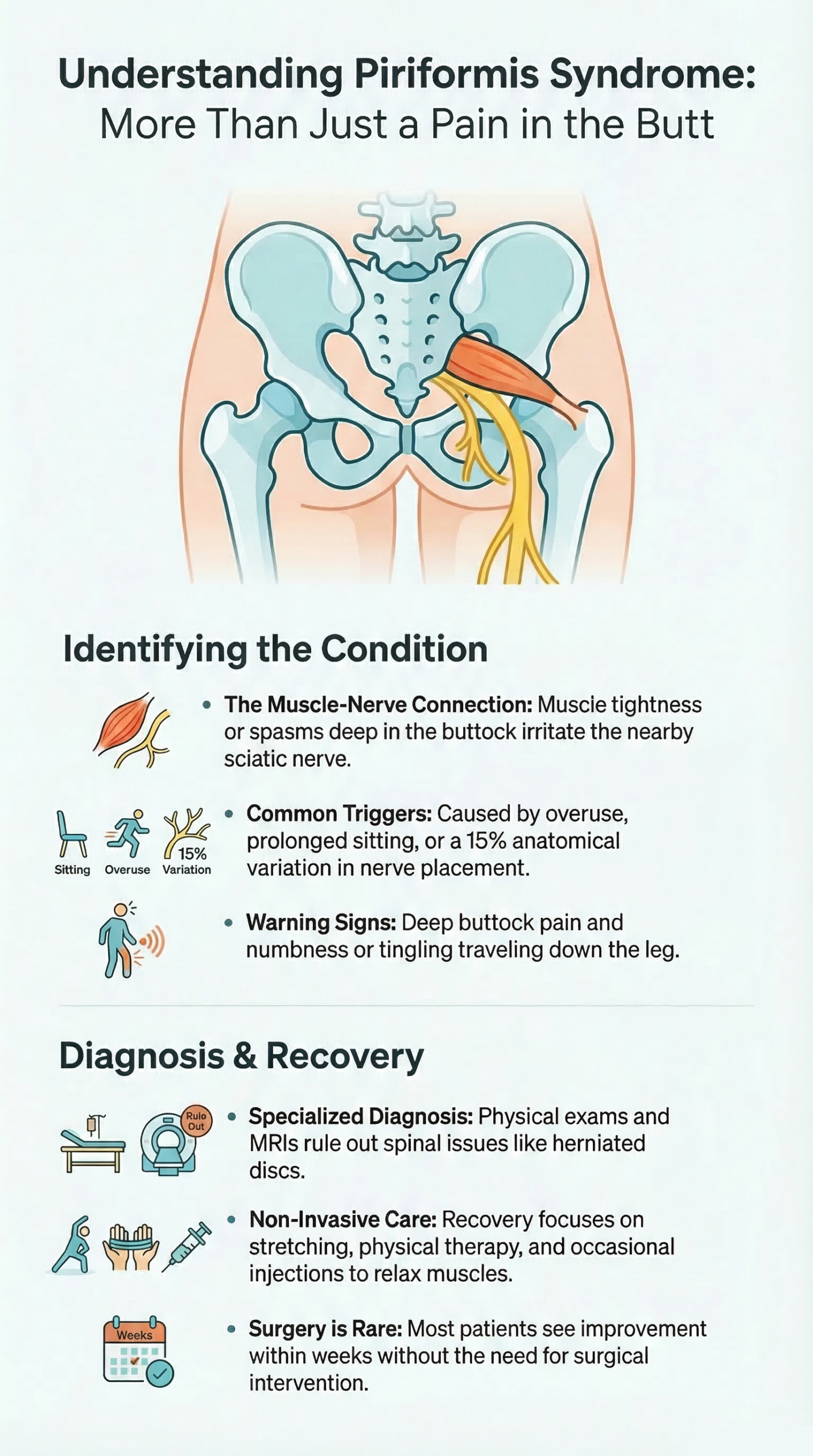
Piriformis syndrome is a condition where the piriformis muscle, located deep in the buttock, becomes tight or spasms. This can cause pain in the buttock area and may also irritate the nearby sciatic nerve (sciatica). When the sciatic nerve is affected it may cause pain, numbness, or tingling that travels down the back of the leg and into the foot. Everyday activities like sitting, walking, or climbing stairs can become uncomfortable and limit daily movement.
Evaluating Your Condition
WHAT CAUSES PIRIFORMIS PAIN?
Piriformis pain often develops when the piriformis muscle tightens, swells, or spasms, putting pressure on the sciatic nerve. In about fifteen percent of people, the sciatic nerve passes through the piriformis muscle instead of underneath it, which may make them more likely to develop piriformis syndrome. Muscle strain, overuse, injury, or prolonged sitting can also lead to irritation and nerve compression.
WHAT ARE THE SYMPTOMS OF PIRIFORMIS PAIN?
The most common symptom is a deep, aching pain in the buttock area, often on one side. This pain can become worse with prolonged sitting, walking, or climbing stairs. Some people also experience tenderness at a specific spot between the lower spine and the top of the thigh bone. When the piriformis muscle compresses the sciatic nerve, symptoms similar to sciatica may develop, such as sharp pain, tingling, or numbness that radiates down the back of the leg and into the foot. Certain movements that stretch or put pressure on the piriformis muscle can intensify the pain. These symptoms may overlap with conditions like lumbar radiculopathy, which also involves nerve-related pain.
DIAGNOSING PIRIFORMIS PAIN
To figure out what’s causing your discomfort, your pain specialist will start by asking about your symptoms and daily activities. They’ll gently check for tenderness in the buttock area and look at how well your hip moves. Certain movements may be used to see if the sciatic nerve is being irritated by the piriformis muscle.
Sometimes, your doctor may order imaging tests such as an MRI or ultrasound to rule out other causes of sciatic-like pain, such as lumbar disc herniations or other spinal issues. These tests help ensure you receive the correct diagnosis and the most effective care.
WHEN SHOULD I CONSIDER GETTING TREATMENT?
You should consider seeking treatment if you experience persistent buttock pain that does not improve with rest, stretching, or over-the-counter medications. If pain radiates down your leg, makes walking or sitting difficult, or worsens over time, it is important to consult a medical professional. Early evaluation and medication management can help reduce symptoms and prevent the condition from becoming more severe.
Common Questions About Piriformis Pain
Will piriformis pain go away on its own?
Sometimes it does, especially if caused by overuse or a minor strain. Rest, stretching, and avoiding long periods of sitting may help. But if the pain keeps coming back or worsens, it’s a good idea to get it checked out.
Is this the same as sciatica?
Not exactly. Piriformis pain can feel like sciatica because it affects the same nerve, but the cause is different. In piriformis syndrome, the muscle presses on the sciatic nerve. In true sciatica, the nerve is often pinched by a spine issue like a herniated disc.
What kinds of treatments are available?
Treatment often starts with stretching, physical therapy, and activity changes. If symptoms don’t improve, your doctor may recommend targeted injections, peripheral nerve stimulation (PNS), or epidural steroid injections to reduce nerve irritation and pain.
How long does it take to feel better?
Many people start to feel better within a few weeks if they follow a treatment plan. If the pain is more severe or has lasted a long time, recovery might take longer and may include more targeted treatments.
Do I need surgery?
Surgery is very rare for piriformis syndrome. Most people improve with non-surgical treatments like physical therapy, medications, or injections.
Common Treatments Available for Piriformis Pain
- Injections
- Physical Therapy


